Posts

Showing posts with the label Conservation

Water Worlds

Image
This post was originally published under the title  "Water Worlds"  in the December 2016 issue of  The Biologist , the Royal Society of Biology's magazine. If you're a member of the RSB you can also view the  article on their website here . Tropical rainforests are known for being full of life. Whether you're captivated by the calls of colourful birds, mesmerised by hypnotically patterned cats, or fascinated by the apparently infinite variety of invertebrate life, you still have to acknowledge that what makes a rainforest are the plants. A forest is by definition a collection of trees, but there is a whole lot more to plant life in a rainforest. Coating every surface, including the trees themselves, are more plants. Some of these we would as surface-covering vegetation in temperate environments as well, like the mosses and liverworts that coat stone walls or the dandelions that poke their sunny faces out between cracks in the concrete. However, there are ...

Seagrass ecosystem services (Grass Roots Biology)

Image
This post was originally published under the title "Grass Roots Biology" in the December 2015 issue of  The Biologist , the Royal Society of Biology's magazine. If you're a member of the RSB you can also view the article on their website here . The images are not those used by the RSB nor are they mine, the copyright belongs to their credited owners and most are from ARKive.org. Neptune grass ( Posidonia oceanica ) meadow in the Mediterranean © M. San Felix, from  l ivescience.com Grass Roots Biology Home to myriad species and acting as massive carbon sinks, seagrass meadows are key marine habitats – but they are disappearing fast, reports Xaali O'Reilly Berkeley The Biologist  62(6) p16-19 Seagrasses are a group of flowering plants adapted to live in salt water. They grow, flower and pollinate completely submerged in estuaries and along shallow coastal waters around the globe, both in temperate and tropical environments. Although they physi...

Return of the Algarve tiger

Image
As a child, I loved writing. From age seven I would write and illustrate short poems and stories for my younger siblings to enjoy (hopefully they enjoyed them...). When I was 12 years old, I started leaning towards a more factual side of writing and combined it with my cat obsession to start my own little feline-themed newsletter (I definitely called it a magazine at the time). I'd write about anything felid-related – from tips on adopting streets cats, to the ethics of cloning pets, to the ecology of wild feline species. It was researching for this newsletter that I first learned about the Iberian lynx ( Lynx pardinus ). Initially I was drawn to this feline because it is the only "big cat" native to Spain, where I grew up. ©  Programa de Conservación Ex-Situ del Lince Ibérico
Image
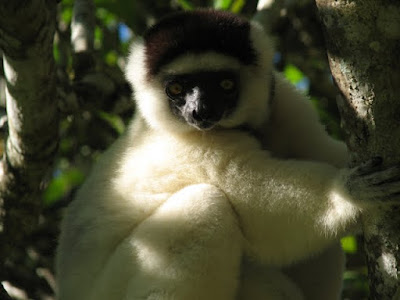
Azafady conservation volunteer >  http://azafady.us/blog/?p=299 (Verreaux's sifaka, Propithecus verreauxi)