Posts

Showing posts with the label Biodiversity

The happy plant that escaped to Africa

Image
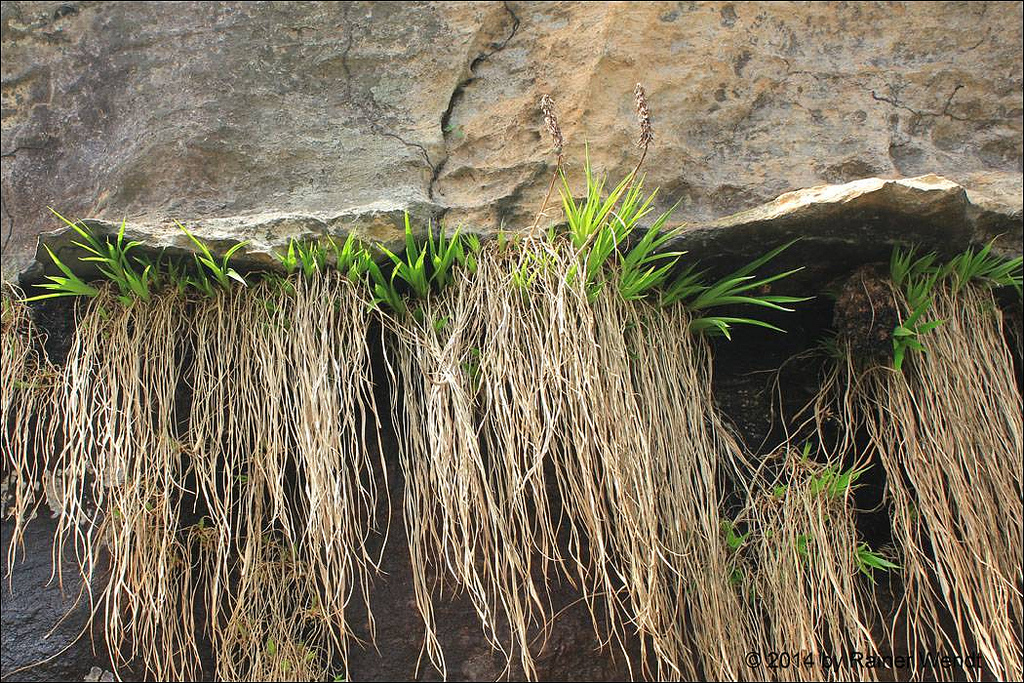
Nestled on the west coast of Africa, a plant lives 3000 km from its 3000 relatives. Most bromeliads are relatively similar in shape but take on a wide variety of habitats in the neotropics. Except one. Meet  Pitcairnia feliciana.

Bee orchids

Image
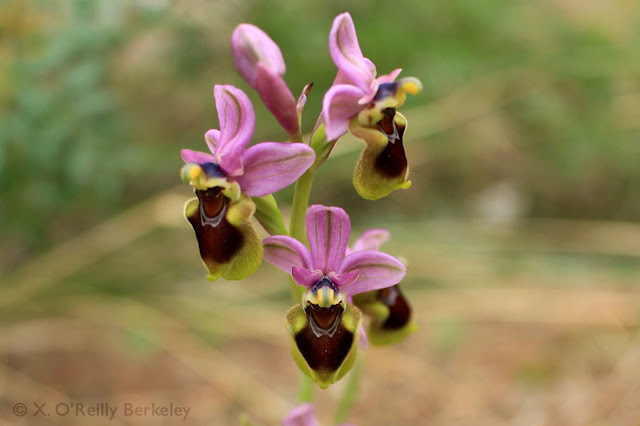
Sawfly orchid ( Ophrys tenthredinifera )

Water Worlds

Image
This post was originally published under the title  "Water Worlds"  in the December 2016 issue of  The Biologist , the Royal Society of Biology's magazine. If you're a member of the RSB you can also view the  article on their website here . Tropical rainforests are known for being full of life. Whether you're captivated by the calls of colourful birds, mesmerised by hypnotically patterned cats, or fascinated by the apparently infinite variety of invertebrate life, you still have to acknowledge that what makes a rainforest are the plants. A forest is by definition a collection of trees, but there is a whole lot more to plant life in a rainforest. Coating every surface, including the trees themselves, are more plants. Some of these we would as surface-covering vegetation in temperate environments as well, like the mosses and liverworts that coat stone walls or the dandelions that poke their sunny faces out between cracks in the concrete. However, there are ...

Seagrass ecosystem services (Grass Roots Biology)

Image
This post was originally published under the title "Grass Roots Biology" in the December 2015 issue of  The Biologist , the Royal Society of Biology's magazine. If you're a member of the RSB you can also view the article on their website here . The images are not those used by the RSB nor are they mine, the copyright belongs to their credited owners and most are from ARKive.org. Neptune grass ( Posidonia oceanica ) meadow in the Mediterranean © M. San Felix, from  l ivescience.com Grass Roots Biology Home to myriad species and acting as massive carbon sinks, seagrass meadows are key marine habitats – but they are disappearing fast, reports Xaali O'Reilly Berkeley The Biologist  62(6) p16-19 Seagrasses are a group of flowering plants adapted to live in salt water. They grow, flower and pollinate completely submerged in estuaries and along shallow coastal waters around the globe, both in temperate and tropical environments. Although they physi...

The Grey Wolves of Europe

Image
The grey wolf ( Canis lupus ) is one of the Northern Hemisphere’s most iconic carnivores. However, in a matter of centuries, the grey wolf has been exterminated from at least a third of its former range [1] . Until 2004, wolves remained listed as “Vulnerable” on the IUCN Red List for Endangered Species [1] . The grey wolf is now making an unexpected comeback in North America and Europe [2–4] . A proposal to strip the grey wolf of the protection from the US Fish and Wildlife Service (USFWS) recently sparked debate, leading to an independent review of the species’ situation in North America [5] . Despite the recovery wolves are making, retracting their protected status could reverse this situation once again [5] . What’s more, a mere rise in numbers may not suffice to ensure the future of the species, as extreme population reduction and fragmentation come with less apparent, genetic consequences as discussed below [6–8] . Additionally, as an apex predator, a great deal of controversy...

Evolution, in real-time

Image
Plant-insect interactions constitute fundamental component communities of terrestrial ecosystems [1] [2] . The different types of plant-insect associations in nature are thought to have driven both plant and insect radiation [3] . The advantages of animal-mediated pollination have led to the evolution and diversification of specialist mutualisms between, for instance, plants and birds (e.g. [4] ), while the need for protection has spawned mutualisms between various tropical tree species and ants [5] [6] [7] . Herbivory, on the other hand, has led to an arm’s race of plant defence mechanisms and insect attack and feeding habits [3] . An ever-increasing number of studies demonstrate the importance of biotic interactions in driving evolutionary change, but considerably fewer reveal the mechanisms by which this occurs in real-time [8] [9] . Monarch caterpillar ( Danaus plexippus ) on milkweed ( Asclepias syriaca ). Credit: Kailen Mooney

Happy World Turtle Day! 2014

Image
To celebrate World Turtle Day (and here I'm using the word turtle broadly to mean all Testudines/Chelonia), here are some photos of sea turtles I took while snorkelling around León Dormido and Giant Galápagos tortoises on Santa Cruz, both in the Galápagos Islands. Plus a drawing that I don't appear to ever have finished... Drawing turtle wrinkles is really boring. © X O'Reilly

Why is the world's richest biodiversity hotspot so biodiverse? Part 1

Image
Today, 22nd of May, is the International Day for Biodiversity. This time last year, I was living in one of the most biologically rich places of the planet, somewhere on the eastern edge of Ecuador's share of the Tropical Andes biodiversity hotspot ( figure 1 ). As the name suggests, this hotspot englobes the tropical portion of the Andes mountain range, along with its immediate foothills as they spill out into the Amazon rainforest. Figure 1 - Tropical Andes hotspot shaded in dark grey. © X O'Reilly According to some criteria, the Tropical Andes hotspot ranks as the most biodiverse of the biodiversity hotspots. As far as science has thus far revealed, this area holds around 45,000 plant species, nearly half of which are endemic – that is, not native anywhere else. This is both the greatest number of absolute plant species and endemic plant species found in any one biodiversity hotspot. The Tropical Andes also boast more species of terrestrial vertebrate animals than an...

When animal and plant populations move up and out

Image
Plants are not always as static as they seem. While most individual plants stay relatively still compared to most animals (no, not all), plant populations can shift laterally over time in an analogous way to animal populations. The main difference is the rooted nature of plants means that they move slowly, across generations. The cause of this is usually environmental: the species is shifting as the climate changes or as competition or another form of pressure encroaches it. Richard Brusca and colleagues have published the results of a plant survey in Arizona which shows that species distributions have changed in the last 50 years. Since a survey carried out by Robert Whittaker in 1963, the vegetation on an area of the Catalina Mountains has crept its way higher up the mountain. Given the difference requirements and tolerance range of different plant species, the entire vegetation does not shift simultaneously or equally; this means that community composition has changed as some plan...

Is the Amazon still hurting over old extinctions?

Image
Mineral nutrients are essential components of any ecosystem. Their absolute presence and relative representation in an environment help shape habitats and the communities that can be supported on them. These nutrients can be one of the most important limiting factors to an ecosystem's productivity. The Amazon rainforest is one of the biologically richest environments on Earth. However, its soil is relatively poor, and much of the vegetation it supports lives on other plants (e.g. see previous posts  Who's who up a tree and Kingdom in the canopy ). One important limited nutrient in the Amazon Basin as a whole is phosphorous. Phosphorous (hereafter represented by its chemical symbol, P) is important for all living cells, with an active roll in energy transport and obtention in the form of ATP; as a core component of our DNA in the form of inorganic phosphate; and composing the living cell walls as phospholipids. Plants have the ability to take inorganic P from the soil and inc...

World Lion Day

Image
On April 27th I wrote a post (and baked a cake) for International Tapir Day – it seemed relevant to celebrate the buggers that were skilfully evading my camera traps. Nearly every day is a "World <insert animal here> Day". So, I'm not going to ramble about each of them, but it turns out that apparently today is the first World Lion Day , a campaign raising awareness for the king of the savannah. Lions, the rock stars of the feline world – just look at that hair! Okay, so maybe the glam rockers or '80s cats.

Happy World Tapir Day!

Image
Image 1.1 - Tapir-themed jungle cake The 27th of July is world tapir day. Last year I became aware of this event through a tapir-obsessed friend of mine, Michael Natt (who's birthday it also happens to be – hippy barfday !). Now that I am living in a place tapirs are native to, I thought it would be appropriate to celebrate this day here at the Timburi Cocha research station with a tapir-themed jungle cake ( Image 1.1 ) and to dedicate these bizarre mammals a blogpost. Image 1.2 - Quick world tapir card to celebrate the occasion. © X O'Reilly

Birds of Ecuador

Image
As I mentioned in a previous post , I've never been that big on birds – except penguins, but subconsciously I think my brain does not want to acknowledge them as birds. I'm not sure why, especially given my obsession with dinosaurs, the only living representatives of which are the Aves of today. In my second year of Zoology at the University of Manchester, I became extremely interested in bird physiology, especially their respiratory physiology, and the evolution of avian flight. And I've occasionally painted birds : they're pretty and they sell well. Only recently (now that I live in an avian hotspot) have I started really started to appreciate their diversity and make a genuine effort to understand their taxonomy. Here in the Ecuadorian Amazon I have been conducting a camera trap studies on mammals for several months now, and am considering switching the theme to medium-to-large terrestrial vertebrates, on account of the amount of bird species and individuals s...

What is wrong with extinction?

What is wrong with the BBC article below? http://www.bbc.co.uk/news/science-environment-21866456 Reading  this BBC article  a few days ago deeply distressed me. Not because it induced some terrible revelation or caused any dark new ideas to surface: what distressed me was its appalling quality, especially for the standards of the BBC. This is an article which is cast into the domain of the public as informative; and those without a better understanding of the subject may see sense in it. However, the subject of the article was either very poorly researched or completely misunderstood by its author, for the reasons I express below and more I will not entertain myself exposing. This is not a case of opening a well-reasoned debate or expressing all possible points of view, but an attempt to challenge profound ideas with some absurd superficial arguments, perhaps in hope his conclusion will appear fresh and controversial. At least he nears the right track towar...

Kingdom in the canopy (I): Biodiversity in Bromeliads

Image
During the University of Manchester's Tropical Biology field course in Payamino, Ecuador, I was studying the biodiversity within bromeliads. Not only is the arboreal cake that is the neotropical canopy layered with tiers of different plants, but many of these are inhabited by a variety of animals.  Bromeliads make particularly good environments for critters to colonise, as the spiralled, rosette arrangement of their leaves ( see Image 1 ) allows rainwater and debris to accumulate between the gaps. The equivalent of tiny ponds may appear, sufficient to act as nurseries for tadpoles; or soil may gather, enough to grow ferns and vines. A bromeliad is like a hanging garden basket – only better. Maybe a hanging zoological garden. Image 1 - Bromeliads in flower. Both the leaves and the flowers of bromeliads serve as homes for other life forms. The first two pictures, from the left, are taken in the Botanical Gardens in Quito. The right-most picture is taken in Payamino and is ...

Kingdoms in the Canopy (II): Who's who up a tree

Image
The canopy of a tropical rainforest is a world very different from the ground it shadows. Trees are ladened with bromeliads and orchids, draped in mosses and ferns, tangled in vines and lianas, and, in some cases, burdened with the weight of other trees. In turn, the leaves of these plants growing on trees – known as epiphytic – may have other forms of plantlife growing on their leaves! These plants are epiphyllic . So, epiphytes grow on other plants (namely trees), and epiphylls decorate the leaves of other plants. Neither type of vegetation is parasitic. During the University of Manchester's Tropical Biology field course in Payamino, Ecuador, I was studying the biodiversity within bromeliads (more on here ). The first part of bromeliad collection is, obviously, finding them. I did just say the place is riddled with them. And it is. However, telling apart arboreal bromeliads and ferns, or even orchids, from the ground isn't always easy. Especially when looking up at a c...